Fiesta Place Community Garden: Policy Recommendation
PortfolioLocation: District Heights, Maryland, United States
Timeline: 2023
Key Role: Conduct community walk-audit, facilitate discussion, analyze finding and recommend policies
Project Description:
District Heights is located in Prince George’s County, Maryland, approximately 10 miles from the Nation’s capital, Washington, D.C. The neighborhood, adjacent to the garden, has 7794 residents, prominently black or African-American and 51% non-English speakers. For community capital, small businesses are within the neighborhoods, public transportation is available, and community gathering spaces are present.
Despite the lack of access to affordable healthy food options, the residents of District Heights have shown remarkable resilience. Without having grocery stores within convenient travel distance, they have established the Fiesta Place community food garden. This initiative, driven by the enthusiasm of some residents, allows them to grow the necessary veggies for their homes daily, showcasing their determination and resourcefulness.
Project Approach/ Method:
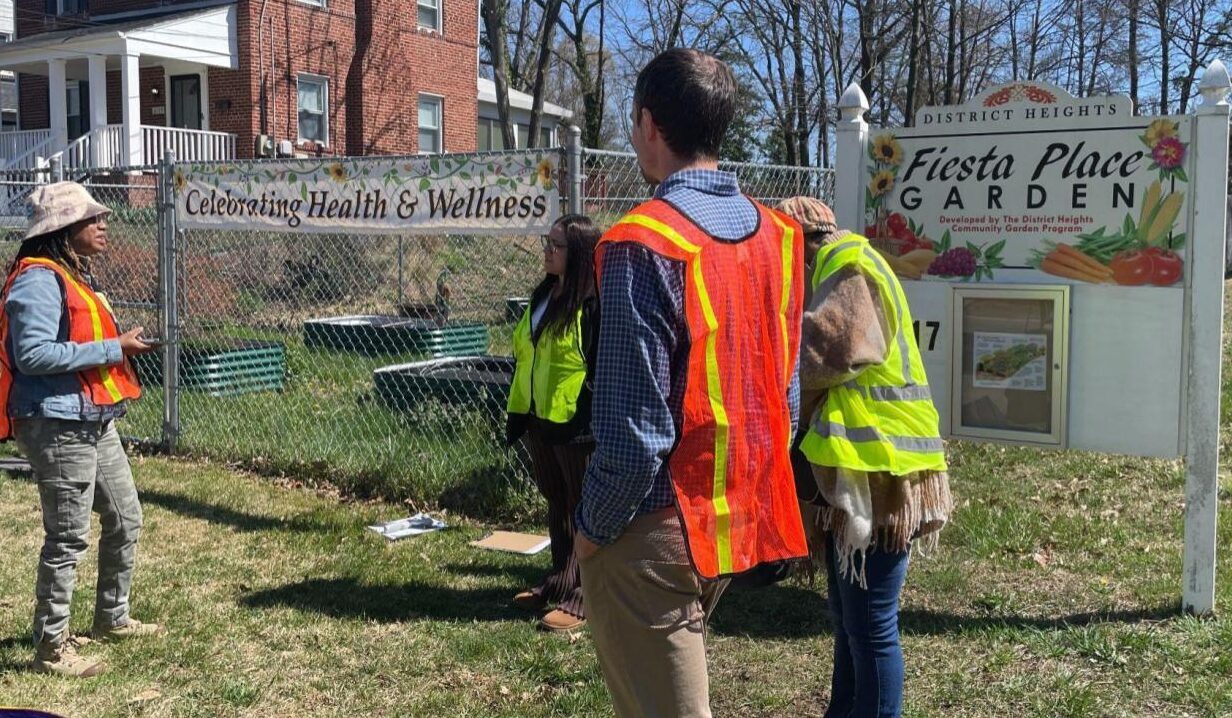
We took a proactive approach in conducting a community walk-audit analysis and analyzing the site demographics; we proposed policy recommendations. Our main goal was to advocate for cost-efficient, evidence-based community programming that is sustainable and accessible, enhances a sense of community, preserves communities’ culture and heritage, and creates economic opportunities.
Recommended Policies:

1. Ensure Food Access: Use the sustainability committee to complete a food access and equity assessment for the City of District Heights to document barriers further and formally identify policies and regulations that are feasible.
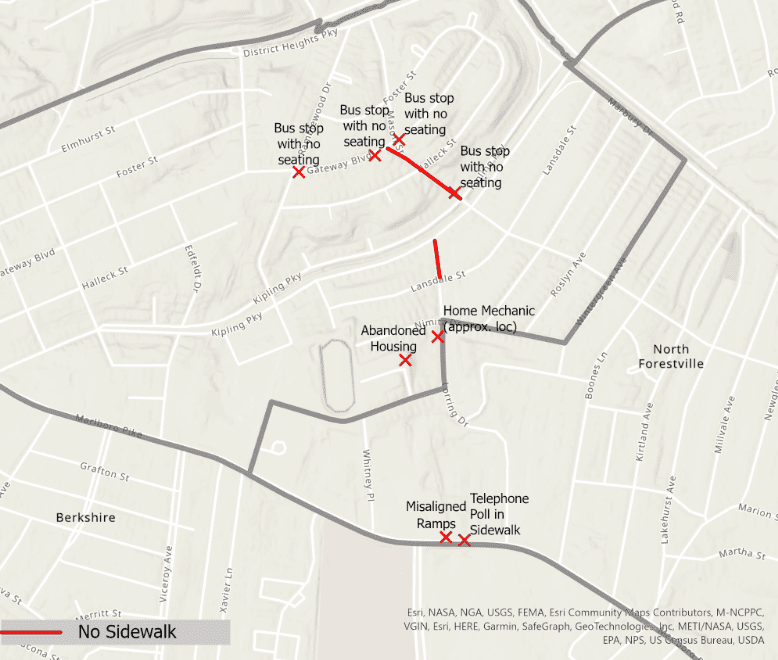
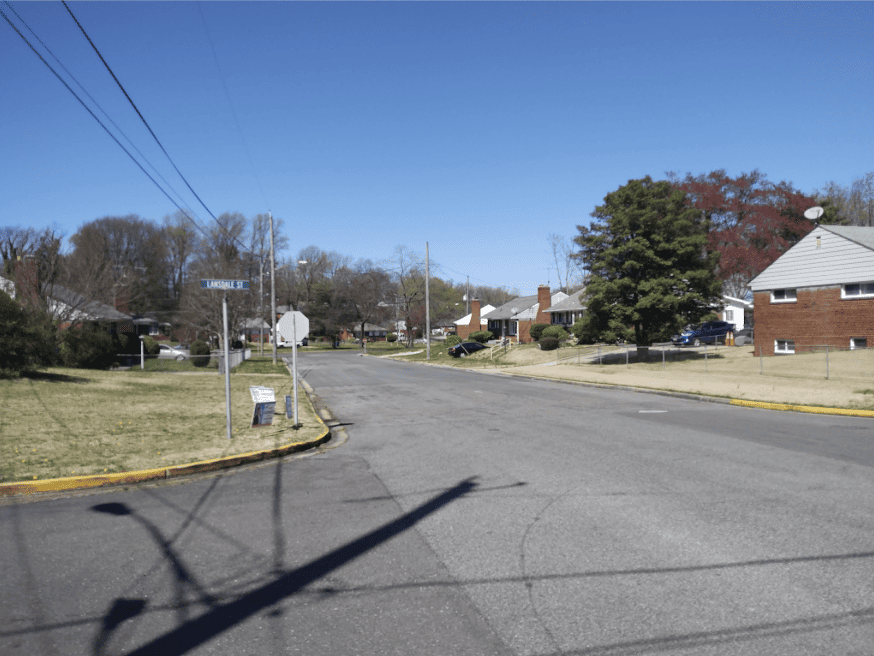
2. Incomplete Sidewalks: Recommend applying for a “Safe Streets for All” (SS4A) Grant to improve, repair, and construct sidewalks where necessary.
3. Community Bus Shelter: Recommend soliciting donations for benches and encouraging the use of local and found materials. Also, coordinate with WMATA on bus stop design guidelines.
4 .Multilingual Programming: Based on interviews with community leaders, we learned that increased outreach and programming to Spanish-speaking community members is necessary as the number of spanish speakers continues to increase.
5. Expand Existing Programs: Many programs occur in the summer months to take advantage of the warmer weather. It should continue, but additional planning is considered in the winter months to keep folks engaged.